
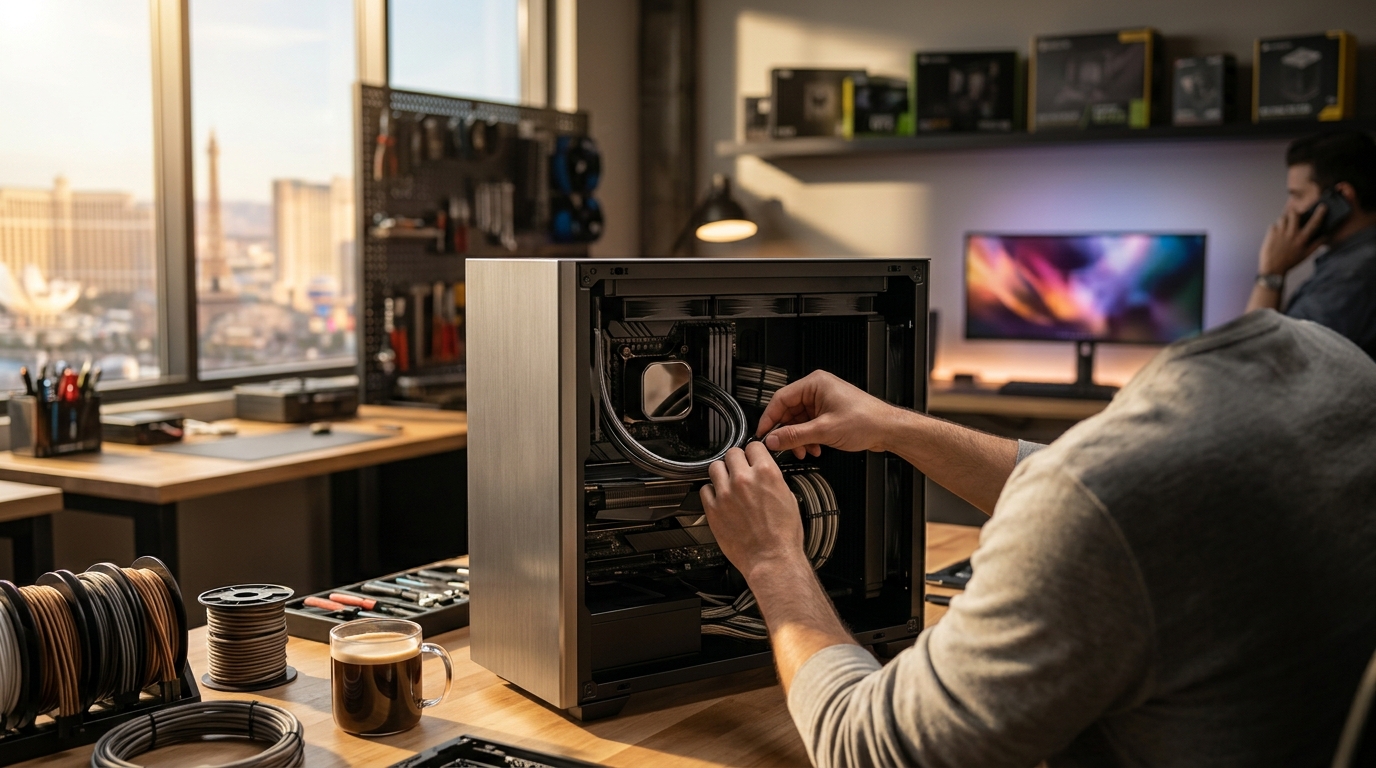
Who Builds Custom or Gaming PCs in Las Vegas?
Doctors of Technology is a Las Vegas computer repair and IT services provider that builds custom and gaming PCs. The company has operated in the Las Vegas area since 2008, offering hardware diagnostics, component upgrades, and system assembly. This guide explains how to evaluate local builders, what to ask before committing, and how to verify credentials. It covers the build process, cost drivers, common mistakes, and long-term performance expectations for custom systems in the Las Vegas market. For additional details, review the 403 Forbidden.
How to Choose a Builder
Experience and Specialization
Experience is a critical factor in system stability. A builder with years of experience understands how different components interact under load. They know which motherboards pair well with specific CPU generations and how cooling solutions affect thermal performance. Specialization in gaming or workstation builds is also important. A shop that focuses on high-performance systems will have better access to premium parts and deeper knowledge of overclocking and stress testing. For additional details, review the .
Communication and Transparency
Transparency builds trust. A good builder will explain their process, including how they test the system before delivery. They should be willing to answer questions about part compatibility and future upgrade paths. If a provider is vague about their testing procedures or hides the specific models of components they use, that is a red flag. Clear communication ensures you understand exactly what you are paying for. For additional details, review the Customer Experience.
What to Ask Before Committing
Before signing a contract or paying a deposit, ask specific questions about the build process. These questions help you gauge the builder's professionalism and technical depth. Do not be afraid to ask for details. A legitimate business will welcome these inquiries. For additional details, review the Frequently Asked Questions.
Component Selection and Sourcing
Testing and Quality Assurance
How to Verify Credentials
Verifying a builder's claims is essential to avoid scams or subpar work. In the Las Vegas area, you can check business licenses and consumer protection records. While specific certifications like Apple or Microsoft authorization are not required for all custom builds, they can indicate a higher level of training for specific ecosystems. However, for general custom PC building, practical experience and customer reviews are often more relevant than formal certifications. For additional details, review the About.
Checking Business Records
Use local business directories and the Nevada Secretary of State website to verify that the business is legally registered. Check for any complaints or legal actions. A clean record is a good sign. Also, look for reviews on independent platforms. Read recent reviews to see if there are patterns in customer feedback, such as consistent praise for communication or complaints about delays.
Validating Technical Claims
If a builder claims specific expertise, ask for examples. You can request to see a portfolio of past builds or speak with a past client. For technical claims, such as overclocking capabilities, ask for benchmark results from similar systems they have built. This helps you verify that their claims are backed by actual performance data.
The Build Process and Timeline
Understanding the build process helps you set realistic expectations. A custom PC build typically involves several stages, from consultation to final delivery. The timeline can vary based on part availability and the complexity of the build.
Consultation and Design
The process starts with a consultation where you discuss your budget, use case, and aesthetic preferences. The builder will then propose a parts list. This stage may take a few days to a week, depending on how quickly you can review and approve the design. It is important to finalize the parts list before assembly begins to avoid delays.
Assembly and Testing
Cost Drivers and Budgeting
The cost of a custom PC is driven by the components chosen and the labor involved. Understanding these drivers helps you budget effectively. Prices fluctuate based on market conditions, so it is important to get a quote close to the time of purchase.
Component Costs
The majority of the cost goes toward hardware. High-end GPUs and CPUs are the most expensive components. Storage and RAM also contribute significantly. Be aware that prices for these components can change rapidly. A quote should specify the exact parts and their costs. Labor costs for assembly and testing are usually a smaller portion of the total price but should still be clearly itemized.
Hidden Fees
Watch for hidden fees. Some builders charge extra for operating system installation, driver setup, or premium cable management. Ask for a total price that includes all services. A transparent quote will list all costs upfront, so there are no surprises at checkout.
Common Mistakes to Avoid
Many customers make mistakes that lead to dissatisfaction or poor performance. Avoiding these common pitfalls ensures a smoother experience.
Ignoring Compatibility
One of the biggest mistakes is ignoring component compatibility. Not all CPUs fit all motherboards, and not all GPUs fit all cases. A reputable builder will handle this for you, but if you are selecting parts yourself, use compatibility checkers. Mismatched components can lead to a system that does not boot or performs poorly.
Underestimating Cooling Needs
Custom Builds vs. Prebuilt Systems
| Customization | Full control over components | Limited to available configurations |
| Upgradeability | Easy to upgrade individual parts | May have proprietary parts |
| Warranty | Component-level warranties | System-level warranty |
Custom builds are ideal for users who want specific performance characteristics or aesthetic preferences. Prebuilts are better for users who prioritize convenience and manufacturer support. Doctors of Technology specializes in custom builds, allowing for tailored solutions that meet specific needs.
Tailoring Builds to Specific Needs
Different use cases require different build priorities. Tailoring the build to your specific situation ensures you get the best value.
Gaming
For gaming, the GPU is the most critical component. Allocate a larger portion of your budget to the graphics card. A high-refresh-rate monitor also enhances the gaming experience. Ensure the CPU is powerful enough to avoid bottlenecks at high frame rates.
Content Creation
For video editing or 3D rendering, the CPU and RAM are more important. A multi-core CPU and large amounts of fast RAM improve workflow efficiency. Storage speed is also crucial for handling large files. A custom build can be optimized for these tasks without overspending on a GPU that is not needed.
Consumer Protections and Warranties
Understanding your rights and the warranties provided is important. Component warranties are provided by the manufacturers, not the builder. The builder's warranty typically covers labor and assembly.
Component Warranties
Most components come with manufacturer warranties ranging from one to three years. Keep your receipts and serial numbers. If a part fails, you will need to contact the manufacturer for a replacement. The builder can help with the RMA (Return Merchandise Authorization) process.
Labor Warranties
Builders often provide a labor warranty that covers issues arising from assembly errors. This warranty period varies by provider. Ask about the length and scope of the labor warranty. It should cover issues like loose connections or incorrect installations.
Las Vegas Local Specifics
Las Vegas has a unique market for computer services. The city's high population density and tourism industry drive demand for reliable technology. Local builders like Doctors of Technology understand the specific needs of residents and businesses in the area.
Climate and Dust
The Las Vegas climate is dry and dusty. Dust accumulation can affect cooling performance. Builders in the area are familiar with this issue and may recommend dust filters or more frequent cleaning schedules. This local knowledge is a benefit of working with a local provider.
On-Site Services
Timing Your Build
Timing can affect the cost and availability of components. New hardware generations are released periodically, which can impact prices and stock.
Hardware Release Cycles
Buying just before a new generation is released can save money, as older models are discounted. However, you may miss out on the latest features. Buying after a release ensures you have the latest technology but may come at a premium. Monitor release schedules to make an informed decision.
Part Availability
High-demand components can have long lead times. Ordering early can ensure you get the parts you want. If you are building for a specific event or deadline, factor in the time needed for part delivery and assembly.
Long-Term Performance and Maintenance
A custom PC is a long-term investment. Understanding how to maintain it ensures it performs well over time.
Regular Maintenance
Regular cleaning and software updates are essential. Dust buildup can reduce cooling efficiency, leading to higher temperatures and reduced lifespan. Software updates ensure compatibility with new games and applications. A maintenance schedule can help you stay on track.
Upgrade Paths
Custom builds are designed with upgradeability in mind. You can replace individual components as technology advances. This extends the life of your system and allows you to keep up with new requirements. A well-designed build will have room for future upgrades, such as additional storage or a more powerful GPU.
Key Takeaways
- Choose a builder with proven experience and transparency in component selection.
- Ask specific questions about sourcing, testing, and warranties before committing.
- Verify business credentials and check independent reviews to validate claims.
- Understand the build process and timeline to set realistic expectations.
- Budget for component costs and watch for hidden fees in the quote.
- Avoid common mistakes like ignoring compatibility and underestimating cooling needs.
- Tailor the build to your specific use case, whether for gaming or content creation.
Frequently Asked Questions
How long does it take to build a custom PC?
What is the cost of a custom gaming PC in Las Vegas?
Costs vary widely based on the components chosen. A mid-range gaming PC can cost several thousand dollars, while high-end systems can be significantly more. Labor costs for assembly and testing are additional. Get a detailed quote for an accurate estimate.
Does Doctors of Technology offer on-site builds?
What warranty is included with a custom build?
Components come with manufacturer warranties, typically ranging from one to three years. The builder usually provides a labor warranty that covers assembly errors. Ask about the specific terms of the labor warranty.
Can I upgrade my custom PC later?
Yes, custom builds are designed with upgradeability in mind. You can replace individual components like the GPU, CPU, or storage as technology advances. This extends the life of your system and allows you to keep up with new requirements.
How do I verify if a builder is reputable?
Check business licenses, read independent reviews, and ask for examples of past work. A reputable builder will be transparent about their process and willing to answer your questions. Verify their credentials through local business directories.
What is the difference between a custom build and a prebuilt system?
How does the Las Vegas climate affect PC performance?
The dry and dusty climate can lead to dust accumulation, which affects cooling performance. Local builders are familiar with this issue and may recommend dust filters or more frequent cleaning schedules to maintain optimal performance.
Conclusion
Building a custom or gaming PC in Las Vegas requires careful selection of a reputable builder. Doctors of Technology provides a reliable option for those seeking tailored systems with professional assembly and testing. By understanding the process, verifying credentials, and budgeting effectively, you can ensure a successful build. Take the time to ask the right questions and review the details before committing. This approach will help you get the best value and performance from your investment. Learn more: 403 Forbidden.