
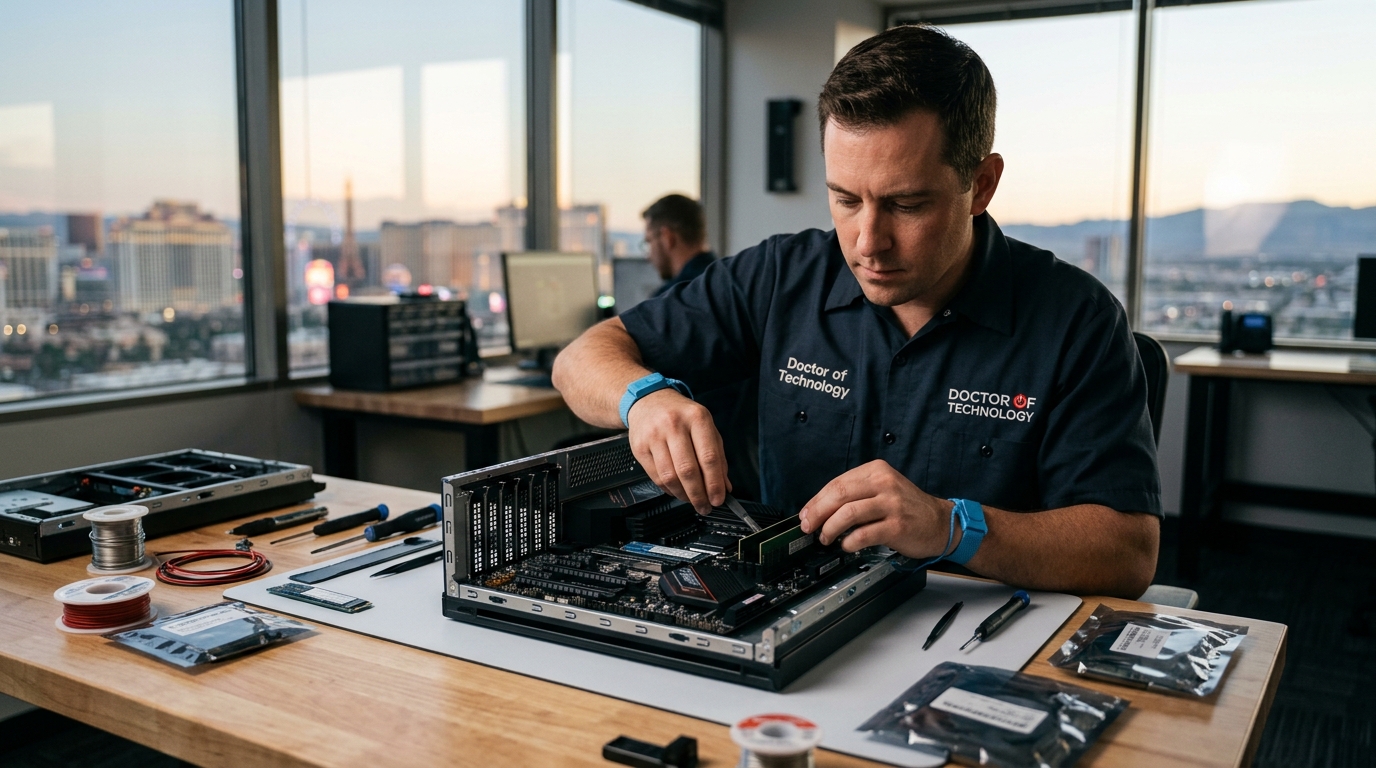
Doctors of Technology diagnoses hardware problems and replaces computer components in Las Vegas. This guide explains how technicians identify failing parts, test system stability, and swap out damaged hardware. It covers the diagnostic process, common replacement scenarios, and how to prepare your device for service. For additional details, review the 403 Forbidden.
Hardware Diagnostics
Hardware diagnostics is the process of testing computer components to identify the root cause of system failures. Technicians use specialized software and physical inspection to isolate issues. This step is critical because software problems often mimic hardware faults. Accurate diagnosis prevents unnecessary part replacements. For additional details, review the .
Initial Assessment and Physical Inspection
The diagnostic process begins with a visual inspection. Technicians check for physical damage, loose connections, and dust buildup. They also review system logs to identify recent errors. This initial phase helps narrow down potential problem areas before running deeper tests. For additional details, review the Customer Experience.
Software-Based Testing
Technicians run stress tests on the CPU, RAM, and storage drives. These tests push components to their limits to detect instability. Memory testing tools check for bad sectors in RAM. Storage diagnostics verify the health of hard drives and SSDs. If a component fails these tests, it is flagged for replacement. For additional details, review the Frequently Asked Questions.
Isolating the Fault
Once a component is suspected, technicians isolate it to confirm the fault. They may swap in known-good parts to see if the issue persists. This method ensures that the replacement part is actually the problem. It also helps determine if the issue is related to power delivery or motherboard compatibility. For additional details, review the About.
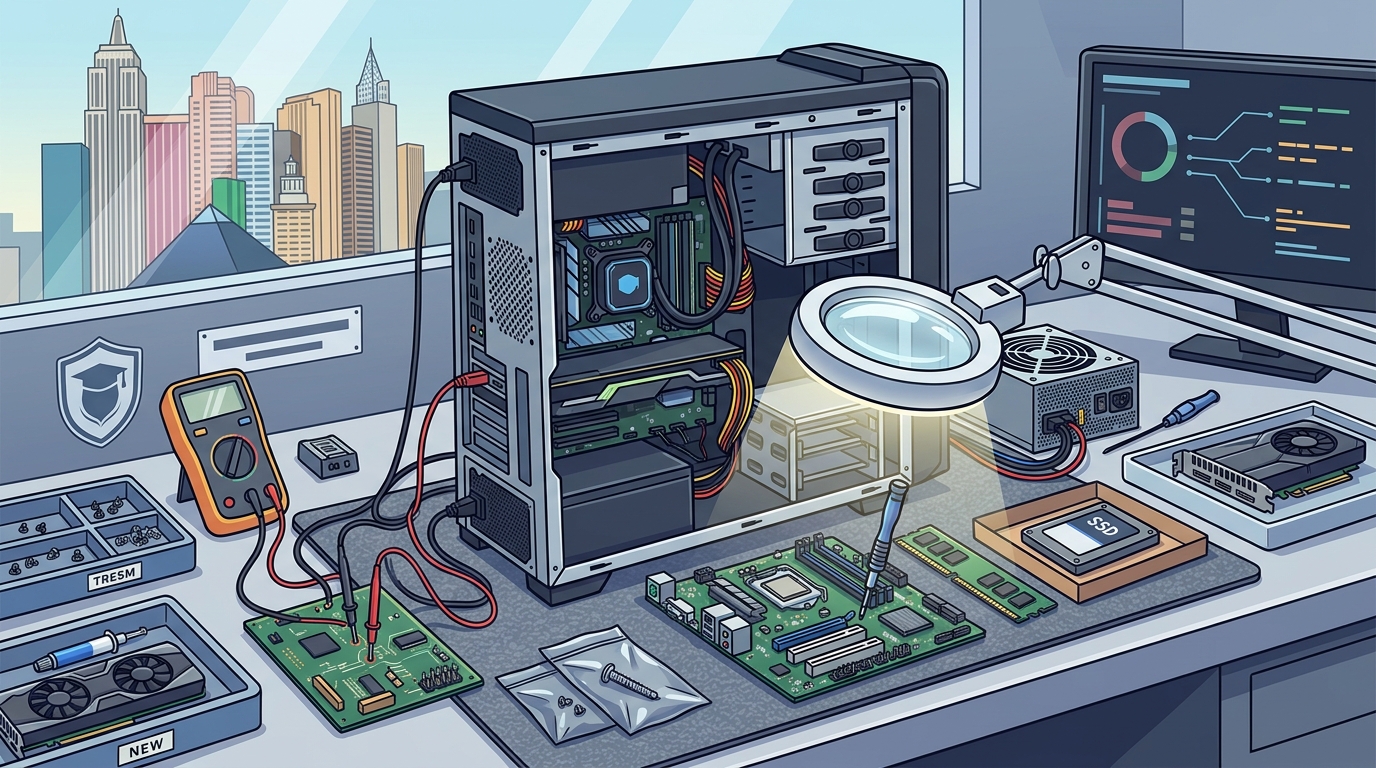
Component Replacement
Component replacement involves removing failed hardware and installing new parts. This service restores system functionality and performance. Technicians handle a wide range of components, from storage drives to processors. Proper installation ensures the new part works correctly with the existing system.
Storage Drive Replacement
Hard drive and SSD replacement is one of the most common services. Failing drives often show signs of slow performance or unusual noises. Technicians clone data to the new drive when possible. If data recovery is required, it is performed before the old drive is discarded. New SSDs significantly improve boot times and application loading speeds.
Memory and Processor Upgrades
RAM and CPU replacements address performance bottlenecks. Adding more RAM helps systems that struggle with multitasking. Replacing an older processor with a newer model can extend the life of a computer. Technicians ensure that the new components are compatible with the motherboard and power supply.
Power and Cooling Systems
Power supply units and cooling fans are critical for system stability. A failing power supply can cause random shutdowns. Overheating due to clogged fans or dried thermal paste can damage the CPU. Replacing these components ensures that the system runs at optimal temperatures and receives stable power.
| Component | Common Symptoms | Replacement Benefit |
|---|---|---|
| Hard Drive / SSD | Slow performance, clicking noises, boot failures | Restores data access, improves speed |
| RAM | System crashes, blue screens, slow multitasking | Increases memory capacity, stabilizes system |
| CPU | Overheating, throttling, failure to boot | Restores processing power, improves efficiency |
| Power Supply | Random shutdowns, failure to power on | Provides stable power, prevents damage |
Key Takeaways
- Hardware diagnostics is the process of testing components to identify the root cause of failures.
- Component replacement involves removing failed parts and installing new, compatible hardware.
- Accurate diagnosis prevents unnecessary repairs and saves money.
- Storage drive replacement is one of the most common and impactful upgrades.
- RAM and CPU upgrades can significantly extend the life of a computer.
- Power supply and cooling system issues can cause random shutdowns and overheating.
- Technicians use both software tests and physical inspection to isolate faults.
- Proper installation ensures new components work correctly with the existing system.
Frequently Asked Questions
What is hardware diagnostics?
Hardware diagnostics is the process of testing computer components to identify the root cause of system failures.
What is component replacement?
Component replacement is the process of removing failed hardware and installing new, compatible parts.
How long does a hardware diagnostic take?
The time required depends on the complexity of the issue. Simple tests may take minutes, while deep diagnostics can take hours.
Can you replace any computer component?
Technicians can replace most standard components, including drives, RAM, CPUs, and power supplies. Some proprietary parts may require specific tools or parts.
Do I need to back up my data before replacement?
It is recommended to back up important data. Technicians can often clone data to a new drive, but data recovery is not guaranteed.
What happens if the diagnosis is inconclusive?
If the diagnosis is inconclusive, technicians may perform additional tests or recommend further inspection. The goal is to identify the root cause before proceeding with repairs.
Is data recovery guaranteed?
Data recovery is not guaranteed. The success of recovery depends on the extent of the damage to the storage device.
Conclusion
Doctors of Technology provides expert hardware diagnostics and component replacement services in Las Vegas. Our technicians use advanced tools and thorough testing to identify and resolve hardware issues. Whether you need a storage drive replacement or a CPU upgrade, we ensure your system runs reliably. today to schedule a diagnostic for your computer. Learn more: 403 Forbidden.