
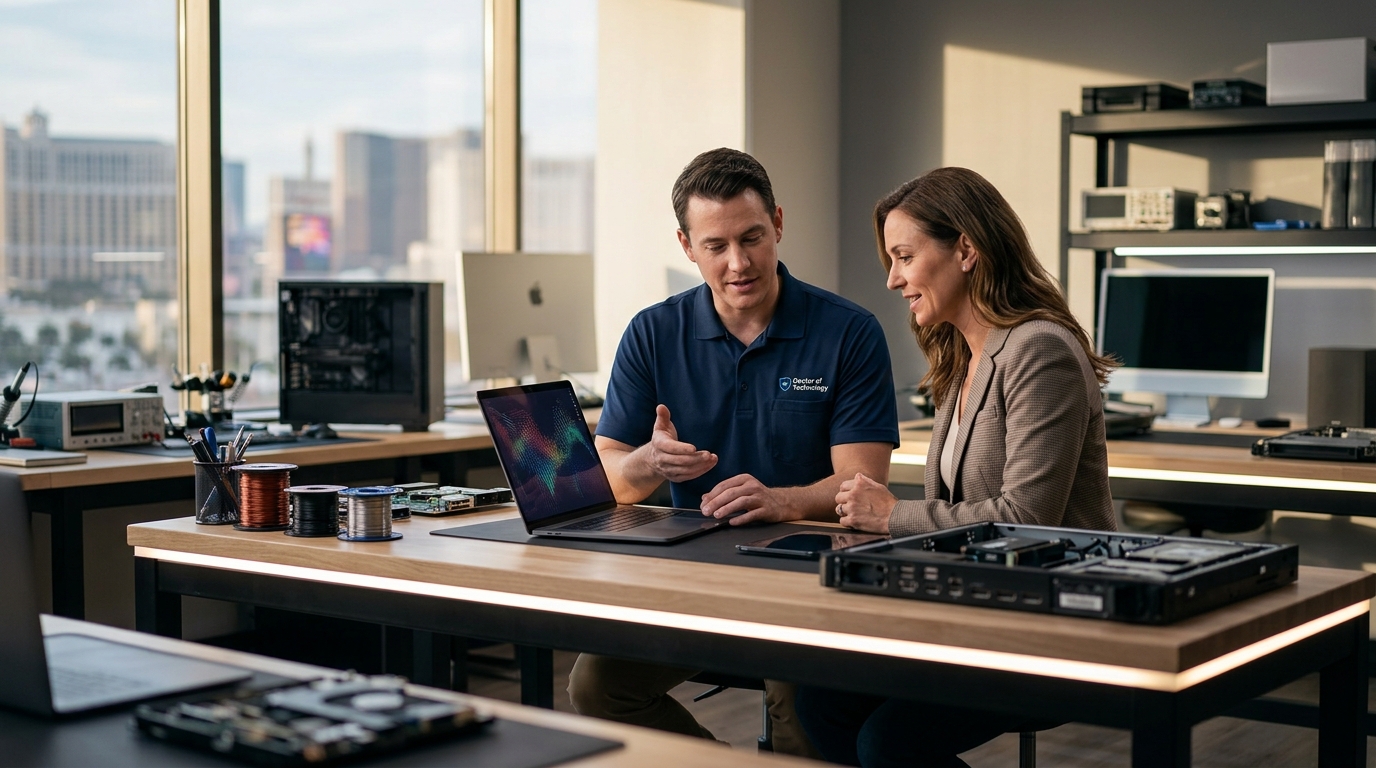
Choosing the right computer repair company in Las Vegas requires evaluating technical expertise, service transparency, and local reputation. The best provider combines certified technicians with clear communication and reliable turnaround times. This guide covers how to assess local repair companies, quality metrics, service specialization, and neighborhood shop options to help you make an informed decision for your hardware needs. For additional details, review the doctorsoftechnology com.
Local Repair Companies
Verifying Business Legitimacy
Before entrusting your device to any provider, verify their business registration and Better Business Bureau (BBB) standing. A high rating on the BBB, such as an A+ rating, suggests a history of resolving customer complaints effectively. Additionally, check for consistent reviews across multiple platforms. Look for patterns in feedback rather than isolated outliers. A company that responds professionally to negative reviews demonstrates a commitment to customer service and continuous improvement. For additional details, review the .
Service Area and Accessibility
Repair Quality Metrics

Diagnostic Accuracy and Transparency
Transparency in the diagnostic process is a hallmark of a trustworthy repair service. The technician should explain the issue in plain language, outline the proposed solution, and provide a detailed estimate before beginning work. Avoid companies that use vague terms or pressure you into immediate repairs. A clear breakdown of labor and parts costs allows you to compare options objectively. This transparency builds confidence and ensures you are not paying for unnecessary services. For additional details, review the Customer Experience.
Warranty and Post-Repair Support
Service Specialization
Hardware vs. Software Expertise
Data Recovery and Security
Local Repair Shops
Community Reputation and Word of Mouth
Word of mouth remains one of the most reliable indicators of a local shop's quality. Ask friends, family, or colleagues for recommendations. Personal experiences provide insight into the customer service and technical skill of the technicians. Online reviews also play a significant role, but they should be read in context. Look for detailed reviews that describe specific issues and how they were resolved. This helps you gauge the shop's ability to handle similar problems. For additional details, review the Frequently Asked Questions.
Convenience and Communication
Comparison of Service Types
| Service Type | Typical Use Case | Key Consideration |
|---|---|---|
| Hardware Repair | Screen, battery, or keyboard replacement | Parts quality and warranty |
| Software Troubleshooting | Virus removal or OS installation | Diagnostic accuracy |
| Data Recovery | Lost files from failed drives | Specialized equipment and protocols |
Key Takeaways
- Verify business legitimacy through BBB ratings and consistent online reviews. For additional details, review the About.
- Look for transparency in diagnostics and clear cost estimates before repairs.
- Check the scope of warranties on both parts and labor.
- Match the provider's specialization to your specific technical needs.
- Consider the provider's experience in data recovery and security protocols.
- Assess convenience factors such as location, hours, and communication.
- Use community reputation and word of mouth as a strong indicator of quality.
- Ensure the provider has a long-standing presence in the local market.
Frequently Asked Questions
How do I verify if a computer repair company is legitimate?
Check their Better Business Bureau rating, read recent online reviews, and verify their physical address. A legitimate company will have a verifiable history and responsive customer service.
What should I look for in a repair warranty?
Look for a warranty that covers both parts and labor. The duration should be reasonable, typically ranging from 30 to 90 days, depending on the service.
Is data recovery always successful?
No, data recovery is not guaranteed. Success depends on the extent of the drive failure. A reputable provider will assess the drive and provide a realistic estimate of recovery possibilities.
How long does a typical computer repair take?
Turnaround times vary based on the issue and parts availability. Simple software fixes may take a day, while hardware repairs requiring parts can take several days.
Do I need to be present during the repair?
Not necessarily. Most shops allow you to drop off your device and pick it up later. Ensure you provide a reliable phone number for status updates.
What is the difference between on-site and drop-off repair?
On-site repair involves a technician coming to your location, which is ideal for businesses. Drop-off repair requires you to bring your device to the shop, which is convenient for individuals.
How can I protect my data during a repair?
Choose a provider with strict security protocols. Ask about their data handling procedures and ensure they have a secure environment for storing devices.
What should I do if the repair does not fix the issue?
Contact the provider immediately. A reputable company will stand behind its work and address the issue under warranty. Keep records of all communications and receipts.